

A different kind of quarterback
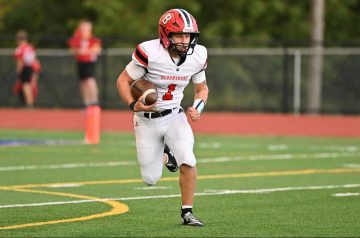
Bloomsburg High School senior quarterback Wyatt Brosious breaks free for a 25 yard gain.
A senior who led the Panthers in passing, rushing, and as a defensive starter, Brosious capped his season with first-team All-State honors and a place on the WNEP Dream Team. But those accolades, including 8413 career total offensive yards and 348 career tackles, as impressive as they are, don’t quite capture the story. This is less about statistics and more about a mindset forged over years, one that turned doubt into discipline and leadership into something quietly contagious.
It helps to start with a moment that stuck.
During a preseason visit, a college coach sized him up and concluded he was “not a scholarship athlete.” Wyatt didn’t argue. He built a response. He created a personal training regimen and gave it a name: NASA, a daily reminder of what he had heard and what he intended to prove. From there, the work became constant, deliberate, and, by all accounts, relentless.
“I love being a quarterback,” Brosious said. “There is pressure, but pressure is a good thing to me.”
That perspective traces back to his earliest days in the game. He began in second grade, moving from guard to running back before landing at quarterback out of necessity when a teammate was injured. What followed was not just a positional change but curiosity. While other kids watched the ball, Brosious studied movement, how quarterbacks navigated space, how defenses shifted, how plays developed before they happened. He admired Ben Roethlisberger for his presence and toughness, and receivers like Antonio Brown for their precision. Even then, he was trying to see the game from the inside out.
By his sophomore year, when he first took over the varsity offense, the learning curve was steep. He admits he didn’t yet have command of the playbook or the reads. But what followed was a transformation, one that showed up in numbers (from 13 touchdowns and 18 interceptions as a sophomore to 25 and 7 as a senior) and, more importantly, in poise.
“There was a different mindset going into this season,” he said. “I want to win.”
His head coach, Mike Kogut, saw that shift up close. “He would take a deep breath, survey the situation, and figure out what he needed to do,” Kogut said. “His progression, on the field and off, was outstanding.”
Leadership, for Brosious is less about speeches and more about investment. He talks about offseason work, about understanding teammates individually, about setting a tone that carries into Friday nights. When games tilt the wrong way, he looks first to the sideline, where his coach’s steady demeanor reinforces his own, and then back to the huddle.
“You have to know not just your job, but everyone else’s,” he said.
That sense of responsibility extends well beyond football. Brosious maintains a 92% GPA and honor roll standing, a reflection, he says, of habits the sport has reinforced—preparation, discipline, accountability. His coach points to a broader impact: a team with no ineligible players, a locker room where expectations are shared.
At home, the same patterns emerge. His parents describe a young man who is competitive yet reflective, frustrated at times but always seeking solutions. They also describe something else: attentiveness. After every game, win or lose, his first words are simple — “Thanks for coming.”
The summer before his senior season offered another glimpse into his routine. Brosious worked a construction job five days a week, added weekend hours, attended practices, and still found time for family and church. He never complained, his coach noted. After long practices, he often stayed for additional drills, sometimes with teammates who chose to follow his example.
That influence can be subtle but powerful. One story, shared by his mother, speaks volumes: when a younger player considered quitting, it was Wyatt who reached out, noting the player’s progress and encouraging him to stay. He did.
“It’s always about his teammates,” Kogut said. “He never once bragged about himself.”
That humility may be the most consistent thread in a career now decorated with honors: All-State recognition, conference awards, Dream Team selection. Brosious acknowledges the goals he set, including becoming an All-State player, but he returns quickly to the collective.
“Football is such a team sport,” he said. “I cannot do it all by myself.”
Next comes the transition to college, where Brosious plans to study sports management while joining the football team roster at Bloomsburg University. He understands the challenges ahead: the speed, the complexity, the size of the players, and he embraces them with the same measured confidence that has defined his rise.
“I’m not expecting to come in and start right away,” he said. “I just want to get on the field any way I can.”
In many ways, that statement echoes the beginning: a player stepping into a role when needed, learning, adapting, growing. Only now, the foundation is deeper, the vision clearer.
Kogut calls him “the standard” for the program, a reflection not just of performance, but of character. It’s a standard built on family support, long hours, quiet determination, and a refusal to be limited by first impressions.
For Brosious, the story isn’t about proving someone wrong. It’s about becoming something more, a teammate, leader, student, competitor, and doing it with a humility that never seeks the spotlight, even as it finds him.
And for Bloomsburg football, that may be the most lasting measure of all.